-
-
COMPETITIONS
Building Emotional Intelligence Through Robotics

Written by Clementina S. Caldwell on behalf of Confuse the Machine.
Clementina is a curious writer who loves exploring all kinds of topics. She’s always on the lookout for new ideas and fun niches to explore. When she’s not writing, you can catch her with a good book or dreaming up her next project.
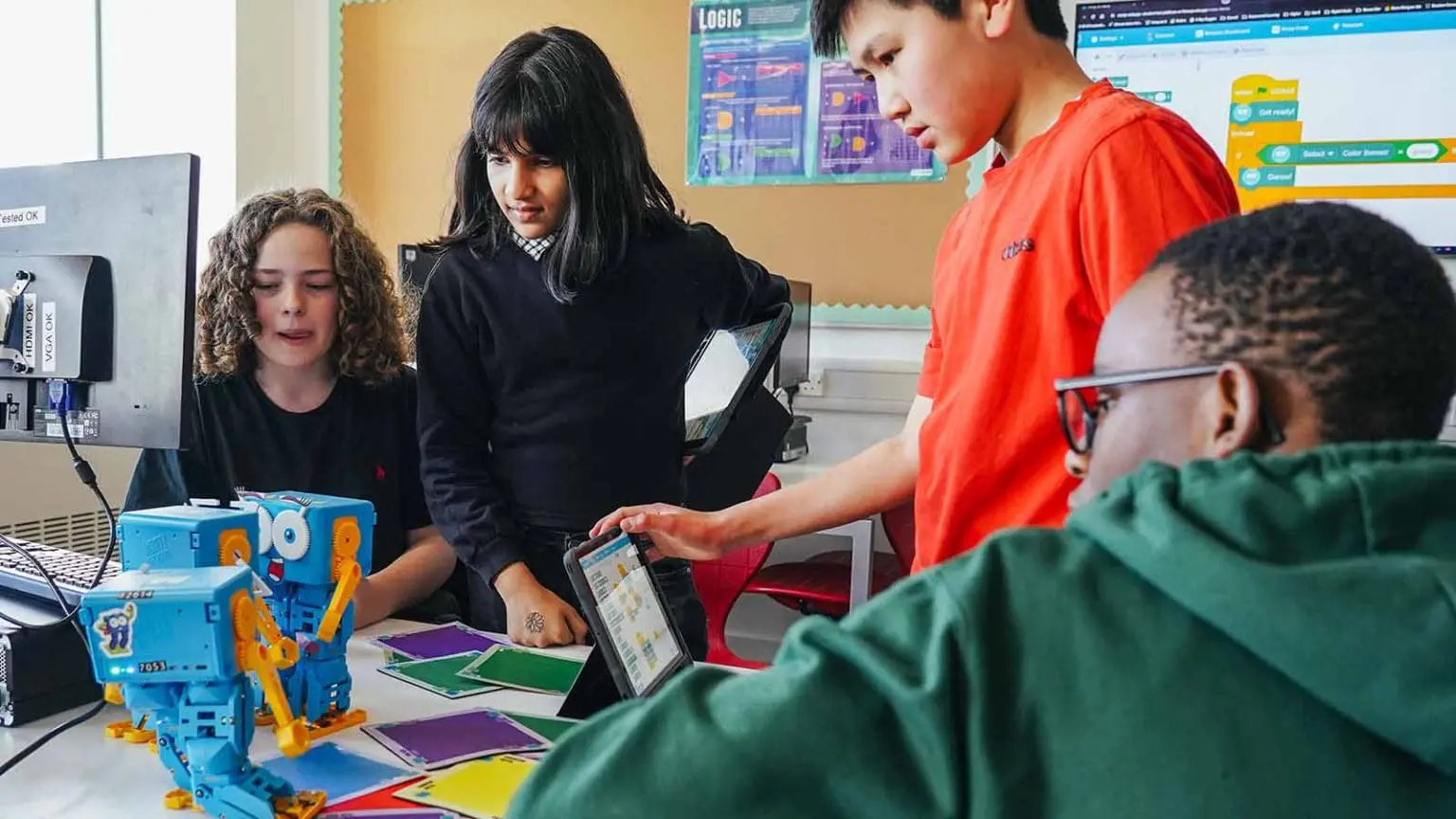
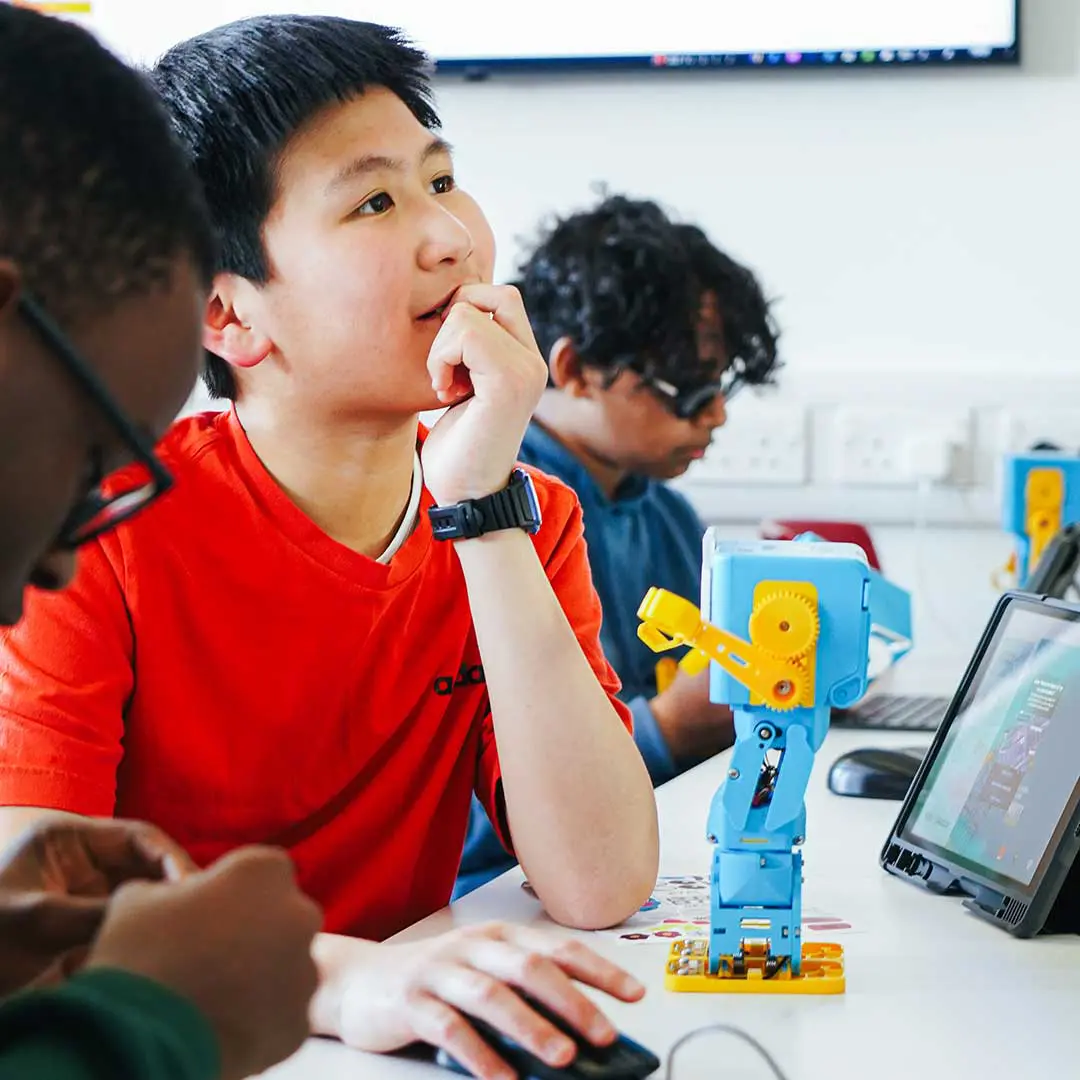
Although humanoid robotics like Marty the Robot are primarily designed to aid STEM education, they can also build emotional intelligence in children: the crucial ability to perceive, manage, and express emotions, as well as understand the emotions of others. For example, children with autism spectrum condition showed improvements in “emotion regulation, self-esteem, and conversation and friendship skills” through use of companion robots, an article in AI & Society reveals. As children typically form instant bonds with Marty the Robot, it’s a natural and easy process for them to develop their communication and emotional skills through play-based learning. In turn, children strengthen life skills needed for mental health and wellbeing, relationships, and academic and professional success.
Humanoid robots aid emotional and social skills
Recent research shows the humanoid (or human-like) nature of robots like Marty the Robot can successfully teach correct social behaviours. For example, children with autism spectrum disorder who played games with a humanoid robot learned how to practise taking turns, a study in Journal of Behavioral Robotics found. This is a key social skill that can be more easily taught via a highly-predictable, repetitive device like a humanoid robot, which, in turn, contributes to healthy human interactions.
Social robots can also positively impact children’s emotional regulation, and, specifically, their ability to handle stress. For instance, young teens who worked on and talked with humanoid robots reported an overall reduction in stress levels, a 2020 study in Frontiers reveals. “Many times a users’ response to the robot was laughter and engagement”, the researchers found. The participants also particularly valued the robot’s ability to appear like it was actively listening to what they told it. In turn, this helped participants develop a better understanding of their own feelings and emotions.
Emotional intelligence paves way for future professional success
LThe development of emotional intelligence at a young age can also help children as they progress into adulthood and eventually enter the workforce. In fact, 71% of employers consider the interpersonal skill of emotional intelligence more important than technical skills in potential job candidates, Harvard Business School reveals. “Employees with high emotional intelligence are more likely to stay calm under pressure, resolve conflict effectively, and respond to co-workers with empathy”, their research concludes.
In addition, tech-savvy children are similarly best prepared for future professional success in STEM or any industry as digital skills are increasingly in demand. For instance, AI (artificial intelligence) is now often used to automate repetitive, time-consuming tasks. In fact, 53% of employees say automation saves two hours a day, the British Computer Society reveals. With AI task automation, employees have more time to focus on high-value tasks or professional development. So, whether they’re responsible for the development and implementation of AI tools or simply use them within their own workflows, digitally-proficient children will undoubtedly thrive in the high-tech future.
Lesson idea: how to use Marty the Robot to develop emotional intelligence
Marty the Robot can successfully be integrated into social-emotional learning lessons, which are designed to help children develop self-awareness, emotional regulation, and social skills. For example, in “The Interview With A Robot” lesson, students are tasked to code Marty to ask them questions — all around the theme of the importance of mental health and social relationships. First, students have to come up with a series of questions for Marty to ask. Love, emotions, friendship, interests, feelings, and sharing are just some topic ideas they can use as inspiration.
Next, students will code Marty (via the blocks that appear on the MartyBlocks interface) in order to set up the interview. Students will be guided by the on-screen Marty sprite to enter their questions and answers, which creates their interview code. Once finished, students can then run their Marty code and take turns to be interviewed by Marty. To finish up the lesson, students reflect on their interview. This is a valuable opportunity to reinforce key concepts relevant to emotional intelligence like self-awareness and social skills.
Robotics are fun and engaging tools that can build emotional intelligence. As children of all ages typically form instant connections with Marty the Robot, it’s easy for them to develop key communication and emotional life skills through play-based learning.
Related Posts
-
18/11/2025
Help to clean the Mangrove Reef with VEXcode VR!
Posted in: Posts03/12/2020In the Coral Reef Cleanup activity, you are equipped with a VR Ocean Cleaning Robot to help clean the Mangrove Reef.... -
19/11/2025
How Educational Robotics Connects STEM Disciplines
Posted in: Posts21/01/2021Robotics is always interdisciplinary in ways that are tangible and applicable to students. Students gain an... -
23/11/2025
Robotics? In school? What for?
Posted in: Posts16/02/2021Building a robot allows students to deepen their knowledge in math, mechanics, engineering and programming while... -
23/11/2025
Teaching Python with VEXcode VR
Posted in: Posts29/05/2021Python is arguably the most in-demand programming language for job seekers. It is also one of the most popular... -
23/11/2025
Grant Writing Guidance
Posted in: Posts07/06/2021Funding is out there, from many different sources. The application process for this funding can seem daunting,...
.png)

.png)
.png)