-
-
COMPETITIONS
-
ROBOTICS, CODING AND AI FOR CHILDREN AGES 7 TO 18
Grant Writing Guidance
Funding is out there, from many different sources. The application process for this funding can seem daunting, especially if this is your first time putting together a grant. This guide will help you get organized so you feel confident starting to write your grant application!
STEP 1: THE BIG PICTURE
Grant makers will not know your needs or goals. They are more likely to fund the materials you need if they understand why you need them. Bring your story and students to life for them! Providing the big-picture context for your application will help them remember the ideas behind your request as they work through the details of your application.
Clarify your need
The first step is to write down what motivates you to apply for a grant. Why do you need funding? What do you hope to accomplish? Try to summarize your request in a single sentence. This statement will serve as your guiding principle and help you build a coherent proposal. Here are a few examples:
- I would like to use Makeblock solutions to launch a collaborative, project-based learning program in our school in order to expose all students to engaging STEM activities each week.
- Our primary school students are struggling in STEM subjects. We would like to make these subjects more engaging and enjoyable and reduce students’ negative preconceptions through educational robotics using KUBO robots.
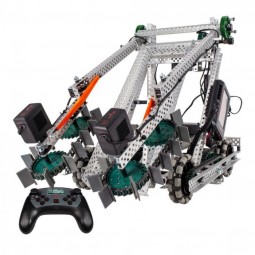
- VEX EXP robotics kits can help my secondary school students develop essential 21st-century skills that will support them throughout their education and prepare them for their future careers.
Determine your Goals
Long-Term Goals: What are your long-term goals? What benefits do you hope this grant will provide for these goals? What do you hope your students will accomplish, long-term? These may be more abstract concepts, such as providing equal access to STEM resources, cultivating 21st century skills, or teaching students to collaborate on problem-based learning projects.
Short-Term Goals: What are your short-term goals? How will you plan on using this grant money to get your project started? What will you hope to accomplish with students first? Think of these goals as the stepping stones to your long-term goals.
STEP 2: GATHER THE DETAILS
Gather the Team
If you are working with other educators or administrators, get everyone involved on the same page. Talk through your goals and ideas. It’s not only good to make sure everyone understands why you are seeking a grant, but they may have other valuable information to add to the grant.
Identify who the grant officers/administrators are. If they have an email or phone number available, make use of their knowledge to answer any questions you have. It’s also always nice to address the grant request personalized to the people behind the grant!
Project Details
How many kits/robots will you be requesting funding for, and how many students will they benefit? What other costs do you need assistance with? Be as specific as possible. Calculate the costs and be prepared to clearly describe your needs and the timeline for the funds you are requesting. Grant reviewers will want to ensure that you understand how you plan to use the funds you are asking for.
Also provide additional information such as examples of activities you plan to implement, the number of instructional hours involved, the subjects covered, and the learning outcomes that will result. Be sure to mention the advantages of the kits or robots you have selected, as well as the educational support and resources provided with them (lesson plans, activity guides, etc.).
Explain how you intend to evaluate the success of your project. This may be a required section of your grant application, but even if it is not, it will demonstrate that your action plan is clear.
Gather the Grant Requirements
Now that you have the details of the project and the team who will be involved, look through the grant application and identify a list of everything you will need to finish it. You may need to get information from other people, so knowing this ahead of time will help make sure you meet any deadlines. Each grant will be different, so this process will help you make sure you can complete each step.
Create a Plan
Create a plan to complete the grant application. If the grant has a specific deadline, or if you have a deadline for a school year, start with that date for your planning and work backwards. Put a date for each piece of the grant application. If others are able to help you, assign work to each member of your team. Identify check-in dates for your team to make sure everything is on track. Staying organized with a clear plan will make the application process more manageable and easier to tackle.
STEP 3: WRITING YOUR GRANT APPLICATION
Writing
Write clearly and concisely. Keep in mind that grant officers have to read hundreds of applications. If your application is difficult to read or understand, that could be the difference between receiving a grant or not. If you have to use jargon or acronyms specific to your grade, subject, etc., make sure to define it. Ask someone who is not a teacher in your area to read your proposal to make sure a non-expert can clearly understand your writing.
Answer each question directly and thoroughly, but do not add irrelevant information. More is not necessarily better!
Don’t forget your needs and goals that you outlined in your big-picture. That’s the reason for this grant application in the first place. Your students will be the ones who benefit, so make sure they are a clear part of your narrative, when appropriate.
Proofread
When you work on a proposal for many hours, it can be difficult to catch your own mistakes. Have a colleague proofread the grant application to make sure there are no errors. This includes spelling and grammar, but also a missing signature or blank section you may have missed in the process. An outside reader will always be a helpful resource before you turn in your application!
STEP 4: SUBMITTING AND WHAT COMES NEXT
Submitting
Do not wait until the last hour of the deadline to submit! Give yourself plenty of time to make sure the application is submitted correctly. If there is a form that you cannot find, you will need time to find it.
Understand the Review Process
Each grant will have its own process for reviewing the applications. Familiarize yourself with both the process and notification deadlines. Do not contact the grant officers unnecessarily about the status of your application when there are clear notification dates.
Often the first round of reviews is to make sure all the necessary information is included in the applications. Being thorough in your process and proofreading will ensure you submit a complete proposal and will make it past this round of review.
The grant applications which are complete will likely move on to a team of reviewers who will score the application according to a standard rubric. You cannot control the other proposals, but you can make sure that your proposal was clear, from your big-picture goals and needs, to the details of your project.
If You are Funded
Congratulations! If you receive funds, you can expect to sign an agreement that outlines the requirements and expectations of the grant for both the grantee (you) and the grant-maker. Keep these requirements in mind as you prepare your project!
If You are Not Funded
Grants can receive hundreds or thousands of applicants. If you do not receive funding, do not give up! If they sent reviewer comments, use those as learning tools. Incorporate those suggestions as changes into your application. You can always apply again in the next cycle. You can also use much of what you created for one proposal for another. Your needs and goals have not changed, so look for new opportunities for funding! Once you have put the work into one application, the next ones will be even easier to complete.
Related Products
Related Posts
-
18/11/2025
Help to clean the Mangrove Reef with VEXcode VR!
Posted in: Posts03/12/2020In the Coral Reef Cleanup activity, you are equipped with a VR Ocean Cleaning Robot to help clean the Mangrove Reef.... -
19/11/2025
How Educational Robotics Connects STEM Disciplines
Posted in: Posts21/01/2021Robotics is always interdisciplinary in ways that are tangible and applicable to students. Students gain an... -
23/11/2025
Robotics? In school? What for?
Posted in: Posts16/02/2021Building a robot allows students to deepen their knowledge in math, mechanics, engineering and programming while... -
23/11/2025
Teaching Python with VEXcode VR
Posted in: Posts29/05/2021Python is arguably the most in-demand programming language for job seekers. It is also one of the most popular... -
23/11/2025
Nos robots éducatifs et kits de robotique sont désormais agréés par Manolo !
Posted in: Posts10/12/2022Nos solutions STEM disponibles dans le catalogue Manolo !